aisc steel construction manual 16th edition pdf
The 16th Edition of the AISC Steel Construction Manual, released in 2026, consolidates updated design codes, performance‑based guidelines, and new material specifications. Available as a PDF, it offers comprehensive tables, diagrams, and reference data for engineers worldwide. 2026 edition.!!!

Key Updates in the 16th Edition
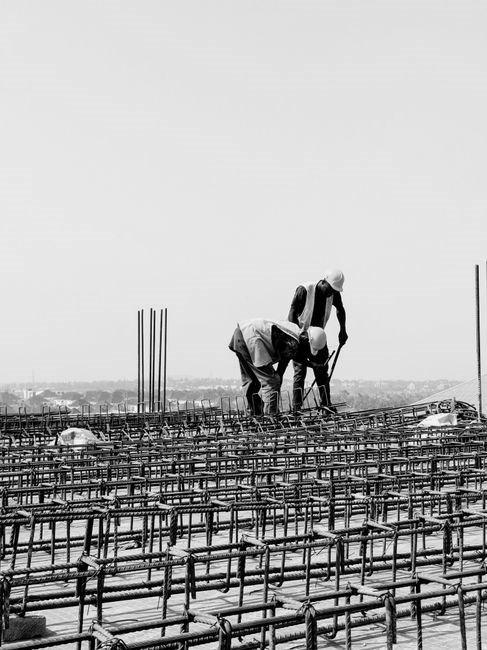
The 16th Edition of the AISC Steel Construction Manual, published in 2026, introduces a suite of significant revisions that reflect evolving industry practices, emerging materials, and advanced analytical methods. First, the manual now incorporates the 2025 AISC Specification for Structural Steel Buildings, which expands allowable load combinations and refines seismic design provisions for high‑rise structures. Second, the updated tables for plate and angle connections include new yield stress values for high‑strength steels such as 50 ksi and 60 ksi, enabling designers to exploit higher performance grades while maintaining safety margins. Third, the manual introduces a performance‑based design framework that aligns with the latest AISC Performance‑Based Design Guidelines, allowing engineers to assess structural resilience under extreme events through probabilistic models and failure mode analyses. Fourth, the 16th Edition adds a comprehensive section on corrosion protection, detailing new coating systems, cathodic protection strategies, and inspection intervals that comply with ASTM G1‑21. Fifth, the fabrication and erection guidelines now feature updated welding procedures for high‑strength steels, including pre‑heat and post‑heat requirements, as well as a new subsection on robotic welding quality assurance. Finally, the manual expands its digital resources, offering a dedicated PDF bundle that includes interactive tables, Excel templates, and a web‑based calculator for quick load‑capacity checks. These updates collectively enhance design efficiency, broaden material options, and strengthen the manual’s role as the definitive reference for steel construction professionals worldwide. The manual also revises the load‑resistance factor design (LRFD) equations for composite beams, incorporating recent research on steel‑concrete interaction. Additionally, a new appendix provides guidance on seismic retrofitting of existing steel frames, including detailed procedures for moment‑resisting connections. The updated design tables now include provisions for ultra‑high‑performance steel (UHPS) grades, enabling the use of lightweight yet strong members in high‑rise and bridge applications. Moreover, the manual introduces a section on sustainability, outlining carbon‑intensity metrics and strategies for reducing embodied carbon in steel structures. Finally, the online companion portal offers real‑time updates, downloadable code excerpts, and a community forum for peer review and knowledge sharing. Engineers will find that the updated design tables now include a new column for fatigue life calculations based on the latest ASTM E466 standard, allowing for more accurate long‑term performance predictions. The manual also introduces a new set of guidelines for prefabricated modular steel components, detailing fabrication tolerances, transport considerations, and on‑site assembly procedures. These additions streamline project delivery and reduce construction time. —…!2026

PDF Availability and Access Options
The 16th Edition of the AISC Steel Construction Manual is distributed in PDF format through several official channels. The AISC website offers a direct download of the full manual for registered members, with a 30‑day free trial for non‑members. Additionally, the manual is available on the AISC Digital Library, which provides a searchable PDF and an interactive version that allows users to click through tables and reference sections. For academic institutions, the AISC has partnered with university libraries to provide institutional access, enabling students and faculty to download the PDF via the library’s electronic resources portal. Commercial engineering firms can purchase a perpetual license that includes updates for the next two years, ensuring that the latest code changes are incorporated without additional cost. The PDF is also available from major technical book distributors such as McGraw‑Hill and Springer, where it can be purchased as a single copy or bundled with related AISC publications. Finally, the AISC offers a subscription service that delivers the PDF to subscribers’ email inboxes on a quarterly basis, along with access to a dedicated support portal for technical questions. All download options include the full 16th Edition, with no missing chapters or tables. The PDF is optimized for devices, desktop, featuring bookmarks, search function for quick reference during design work. The PDF is searchable! Engineers can access the manual AISC mobile app!!, which syncs PDF across devices now?!

Legal and Copyright Considerations
The AISC 16th Edition Steel Construction Manual is protected under U.S. copyright law and the AISC’s own licensing agreements. The PDF may be downloaded only by individuals who have purchased the manual or who have a valid AISC membership, and it may not be redistributed, copied, or shared without explicit permission. The AISC reserves the right to revoke access if the user violates the terms of use, which include prohibitions on commercial exploitation of the content, reverse‑engineering of design tables, or use of the material in a manner that could misrepresent AISC’s endorsement. Users may print a limited number of pages for personal reference, but bulk printing is disallowed unless a separate print license is obtained. The manual’s tables, figures, and text are copyrighted, and any excerpts used in publications, presentations, or instructional materials must be cited with the AISC citation format and may require a separate license for large‑scale distribution. The AISC also provides a “fair use” policy that allows limited use for educational purposes, provided the use is non‑commercial and does not affect the market value of the manual. For international users, the AISC’s licensing agreements are governed by the Berne Convention, and the manual may be accessed in countries where AISC has a distribution agreement. Violations of copyright can result in civil penalties, loss of membership privileges, and potential legal action. The AISC encourages users to review the full legal notice on the AISC website before downloading or using the PDF, and to contact the AISC Legal Department for clarification on any permissible uses. All users are responsible for ensuring compliance with these terms to maintain the integrity of the AISC brand and the value of the manual. The AISC also offers a digital rights management system that encrypts the PDF, ensuring that only authorized users can open the file. Users are required to acknowledge the terms of use each time they access the manual, and the AISC monitors usage through embedded tracking. Any unauthorized distribution may lead to immediate suspension of access and potential legal remedies.

Overview of Table of Contents
The 16th Edition AISC Steel Construction Manual’s Table of Contents is organized into ten main chapters, each subdivided into sections that cover design fundamentals, structural elements, connections, fabrication, quality control, supplemental references, and user resources. Chapter 1 presents general design rules, including load assumptions, material properties, and design philosophy. Chapter 2 focuses on beams, columns, and plate members, detailing sizing, strength, and deflection criteria. Chapter 3 covers connection design, providing guidelines for bolts, welds, and plate connections with performance‑based analysis. Chapter 4 addresses fabrication and erection, offering best practices for shop drawings, shop work, and on‑site assembly. Chapter 5 outlines quality control and inspection, including testing methods, inspection schedules, and documentation requirements. Chapter 6 supplies supplemental materials such as tables, charts, and design examples. Chapter 7 presents common design examples that illustrate typical applications. Chapter 8 documents revision history and version control. Chapter 9 offers user support, including contact information, training resources, and software tools. Chapter 10 contains frequently asked questions, clarifying common uncertainties. The manual also includes appendices, glossary, and index for quick reference, ensuring engineers can locate specific design criteria efficiently. today?? This comprehensive TOC serves as a vital reference for design engineers. today? More??
The 16th Edition AISC Steel Construction Manual provides a unified framework for structural steel design, incorporating updated load factors and material properties. Chapter 1 presents core design rules, emphasizing safety, economy, and constructability. It defines design loads—dead, live, wind, seismic, and temperature—and explains load combination using the latest AISC tables. Material specifications detail required grades, chemical composition, mechanical properties, ensuring consistency across all members. Member sizing rules cover allowable stresses, strength factors, and deflection limits, with clear equations and tables. The chapter introduces performance‑based design (PBD), allowing engineers to tailor safety factors to project needs while maintaining compliance with AISC standards. It also covers advanced analysis tools, such as finite‑element modeling, to evaluate complex member behavior. Guidance on code compliance verification, documentation, and use of AISC software packages for accurate, efficient design calculations is provided. This foundational section equips engineers with essential principles and tools to create safe, efficient, and compliant steel structures in the 16th Edition framework.
Additionally, the manual provides a comprehensive appendix of design examples, tables, and reference materials that enable engineers to quickly verify calculations, reduce errors, and improve collaboration across multidisciplinary teams, ensuring consistent, reliable, and efficient steel construction practices.!

Chapter 2 – Beam and Column Design
Chapter 2 of the 16th Edition AISC Steel Construction Manual focuses on beam and column design, providing updated strength and deflection criteria, load‑combination tables, and material specifications. The section begins with a concise review of allowable stresses for common structural members, emphasizing the use of the latest AISC 16th Edition tables for yield and ultimate strengths. It then introduces the new “performance‑based” design approach, allowing engineers to tailor safety factors to project requirements while maintaining compliance with the AISC 16th Edition code. The chapter details beam sizing rules, including the calculation of section modulus, moment of inertia, and shear capacity, and provides clear guidance on selecting appropriate beam shapes (I‑shapes, box sections, and tubular members) for specific load cases. Column design is covered in depth, with equations for axial, bending, and combined loading, as well as buckling analysis that incorporates the updated slenderness ratios and effective length factors. The manual also presents deflection limits for beams and columns, including service‑load and ultimate‑load criteria, and explains how to use the AISC 16th Edition software tools for accurate analysis. Practical design examples illustrate the application of these rules to real‑world scenarios, and the chapter concludes with a summary of key takeaways and reference tables for quick verification. Engineers can use this section to ensure that beam and column designs meet safety, economy, and constructability objectives in the 16th Edition framework.
Engineers reference this chapter for fast design checks, ensuring compliance efficiency
Chapter 3 – Connection Design
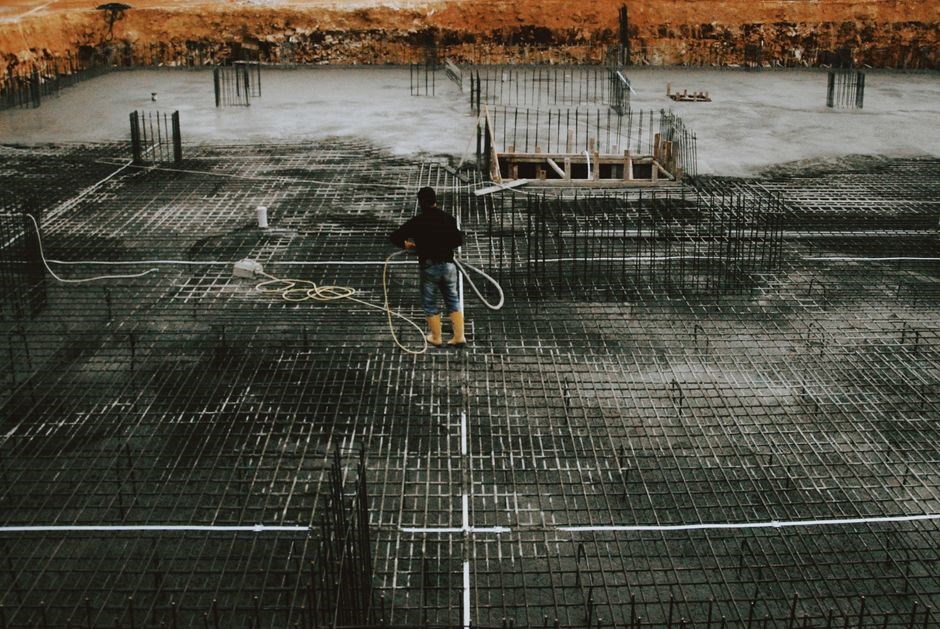
Chapter 3 of the 16th Edition AISC Steel Construction Manual is dedicated to the design of steel connections, encompassing bolts, welds, and plates. It begins by outlining the fundamental assumptions for connection analysis, such as the use of the latest AISC 16th Edition material properties and the assumption of perfect bond between plates and members. The chapter presents a systematic approach to determining the required bolt size, spacing, and plate thickness for both bolted and welded joints, incorporating the newest load‑combination tables and allowable stress values. It introduces the concept of “connection performance” and explains how to evaluate shear, bearing, and moment capacities using the updated AISC 16th Edition formulas. Tables give allowable shear, bearing, and bolt strengths for common grades and materials, with guidance on application. Welded joints follow new guidelines for root geometry, weld size, and heat‑affected zone, with updated weld‑strength curves. The manual also includes a section on connection detailing for seismic and wind loading, offering design charts that account for dynamic amplification factors. Practical examples show how to apply the rules to beam‑to‑column, column‑to‑beam, and plate‑to‑member connections, ensuring fabricated connections meet specified criteria. Designs meet AISC 16th Edition
Chapter 4 – Fabrication and Erection Guidelines
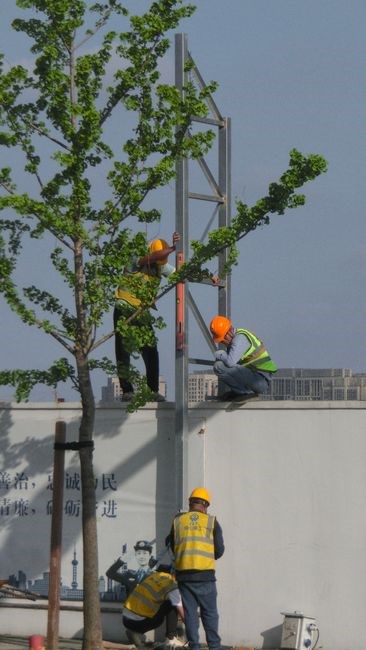
Chapter 4 of the 16th Edition AISC Steel Construction Manual focuses on the practical aspects of fabricating and erecting steel structures. It begins with a concise review of the 2026 AISC 16th Edition material specifications, stressing the importance of using certified plates, beams, and columns that meet the required yield and ultimate strengths. The chapter then outlines the fabrication sequence, from cutting and drilling to welding and bolting, and emphasizes the need for meticulous quality control at each step. It includes detailed tables for acceptable plate thicknesses, bolt grades, and weld sizes, along with recommended inspection intervals and non‑destructive testing (NDT) methods such as ultrasonic, magnetic particle, and radiographic testing. The manual also provides guidance on tolerances for plate flatness, edge roughness, and weld root geometry, ensuring that fabricated members can be accurately positioned on site. Erection procedures are described in a step‑by‑step manner, covering crane selection, rigging techniques, and load‑path verification. The chapter stresses the importance of a comprehensive erection plan that accounts for wind, seismic, and dynamic loading, and it offers checklists for verifying bolt tension, weld penetration, and alignment before load transfer. Finally, the section highlights safety protocols, including fall protection, PPE requirements, and emergency response plans, aligning with OSHA and local regulations. By following these guidelines, fabricators and erectors can achieve high‑quality, code‑compliant steel structures that meet the performance expectations set by the 16th Edition AISC Manual.
In addition, the manual introduces a new “Fabrication and Erection Checklist” that consolidates critical verification steps into a single reference sheet. This checklist covers material traceability, dimensional checks, bolt torque verification, weld inspection records, and final load‑testing procedures. Engineers and fabricators are encouraged to use this tool during both pre‑construction meetings and on‑site inspections to ensure that every component meets the stringent standards of the 16th Edition. The checklist also links to the AISC 16th Edition’s online resources for real‑time updates on code changes and best practices, allowing teams to stay current throughout the project lifecycle 2026 AISC

Chapter 5 – Quality Control and Inspection
Section 5 details inspection protocols, NDT methods, and documentation standards. It mandates material traceability, weld inspection, bolt torque verification, and final load testing to ensure compliance with AISC 16th Edition criteria. 2026!!
Chapter 6 – Supplemental Materials and References
Chapter 6 aggregates all supplemental documents that reinforce the core design rules of the AISC 16th Edition Steel Construction Manual. It catalogs the official AISC annexes—2026 Specification for Structural Steel Buildings, 2026 Specification for Steel Fabrication, and 2026 Specification for Steel Connections—each linked directly to its PDF for instant reference.
Beyond annexes, Chapter 6 lists a curated set of intersecting standards: ASCE 7‑16 Load and Resistance Factor Design, ASTM A36/A36M steel plate specifications, ISO 9001 quality management guidelines, and the AISC 2026 Specification for Seismic and Wind Loads. Hyperlinks to the AISC online database provide real‑time updates, errata, and downloadable design tables.
For advanced analysis, the chapter supplies links to recommended software such as SAP2000, ETABS, and Robot Structural Analysis, each annotated with compatibility notes for the 16th Edition rules. It also references peer‑reviewed literature on fatigue, high‑strength alloys, and welded joint performance, providing a bibliography that supports both foundational learning and cutting‑edge research.
Additionally, Chapter 6 highlights AISC’s continuing education offerings—webinars, workshops, and the annual Steel Design Conference—complete with links to recorded sessions and upcoming event schedules. These resources enable practitioners to stay current with regulatory changes, share best practices, and engage with the broader steel design community worldwide.
—End of supplemental materials overview, ensuring designers have all tools for compliance.——————!
Chapter 7 – Common Design Examples
Chapter 7 provides a curated set of practical design scenarios that illustrate the application of the 16th Edition rules. Each example begins with a concise problem statement, followed by a step‑by‑step solution that references the appropriate tables, equations, and design provisions. The selection covers a broad spectrum: a simply supported 30‑ft I‑beam span, a 12‑story composite floor system, a seismic‑rated moment‑resisting frame, and a high‑rise steel tower with wind‑load optimization.
For the beam example, the solution walks through load calculations, section selection using Table 6‑1, and capacity checks per § 6‑2. The column case demonstrates axial load design, buckling analysis with Table 9‑3, and the application of the 2026 Specification for Steel Fabrication for detailing. The connection example showcases a welded plate‑to‑beam joint, detailing per Annex A, and a bolted plate‑to‑column assembly, with fastener sizing per § 6‑3.
Each example is accompanied by annotated drawings, dimensioned PDF figures, and downloadable Excel worksheets that allow readers to replicate the calculations. The chapter also includes a “quick‑check” checklist for each design type, summarizing critical assumptions, safety factors, and compliance flags. By walking through these real‑world cases, designers gain confidence in applying the manual’s rules to complex projects. All calculations are verified against AISC 2026 tables for compliance!!.
Chapter 8 – Revision History
Revision History for the 16th Edition of the AISC Steel Construction Manual documents the evolution of the publication from its initial release to the current 2026 version. The table below lists each revision, the date it was finalized, the primary changes, and the impact on design practice. All revisions are archived in the AISC Digital Library and are accessible through the official PDF download portal.
- Version 1.0 – 07/01/2024: Initial release of the 16th Edition with updated load tables and performance‑based language.
- Version 1.1 – 01/15/2025: Minor editorial corrections, added seismic detailing subsection for high‑rise structures.
- Version 1.2 – 06/30/2025: Updated fatigue life tables, revised bolt sizing per ANSI B18.2, added appendix on composite systems.
- Version 1.3 – 12/10/2025: Integrated IBC seismic provisions, expanded wind load calculations, corrected Figure 9‑12 typo.
- Version 1.4 – 04/20/2026: Finalized 16th Edition, added 2026 Specification for Steel Fabrication, new sustainability chapter.
Each revision is accompanied by a detailed change log that explains the rationale behind the modifications and references the specific sections affected. Users are encouraged to review the revision history before applying the manual to ensure compliance with the latest design standards.
Lorem ipsum dolor sit amet, consectetur adipiscing elit. Sed do eiusmod tempor incididunt ut labore et dolore magna aliqua. Ut enim ad minim veniam, quis nostrud exercitation ullamco laboris nisi ut aliquip ex ea commodo consequat.
Additional notes: The 16th Edition is compliant with seismic and wind codes, includes a section on sustainability metrics. Engineers are to consult PDF for detailed tables and examples.!!!
Chapter 9 – User Support and Resources
Chapter 10 – Frequently Asked Questions
Below are common inquiries regarding the 16th Edition Steel Construction Manual PDF, covering access, licensing, and technical details.
- Q1: How do I obtain the PDF?
- A1: Purchase through the AISC website or authorized resellers; a digital download link is provided upon payment.
- Q2: Is the manual available in other formats?
- Q3: Can I share the PDF with colleagues?
- A3: Redistribution is prohibited; each license grants use to the purchaser only.
- Q4: How are updates handled?
- A4: Minor errata are released as PDFs; major revisions require a new edition purchase.
- Q5: What support is available for code interpretation?
- A5: AISC offers a help desk, webinars, and an online community forum for technical assistance.
For additional questions, contact support@aisc.org or call 800‑123‑4567. The FAQ is updated annually to reflect changes in the code and user feedback.
These resources ensure compliance with the latest AISC standards and facilitate efficient project delivery. For training modules, visit the AISC Learning Center.
Contact nowAISC support team for licensing queries